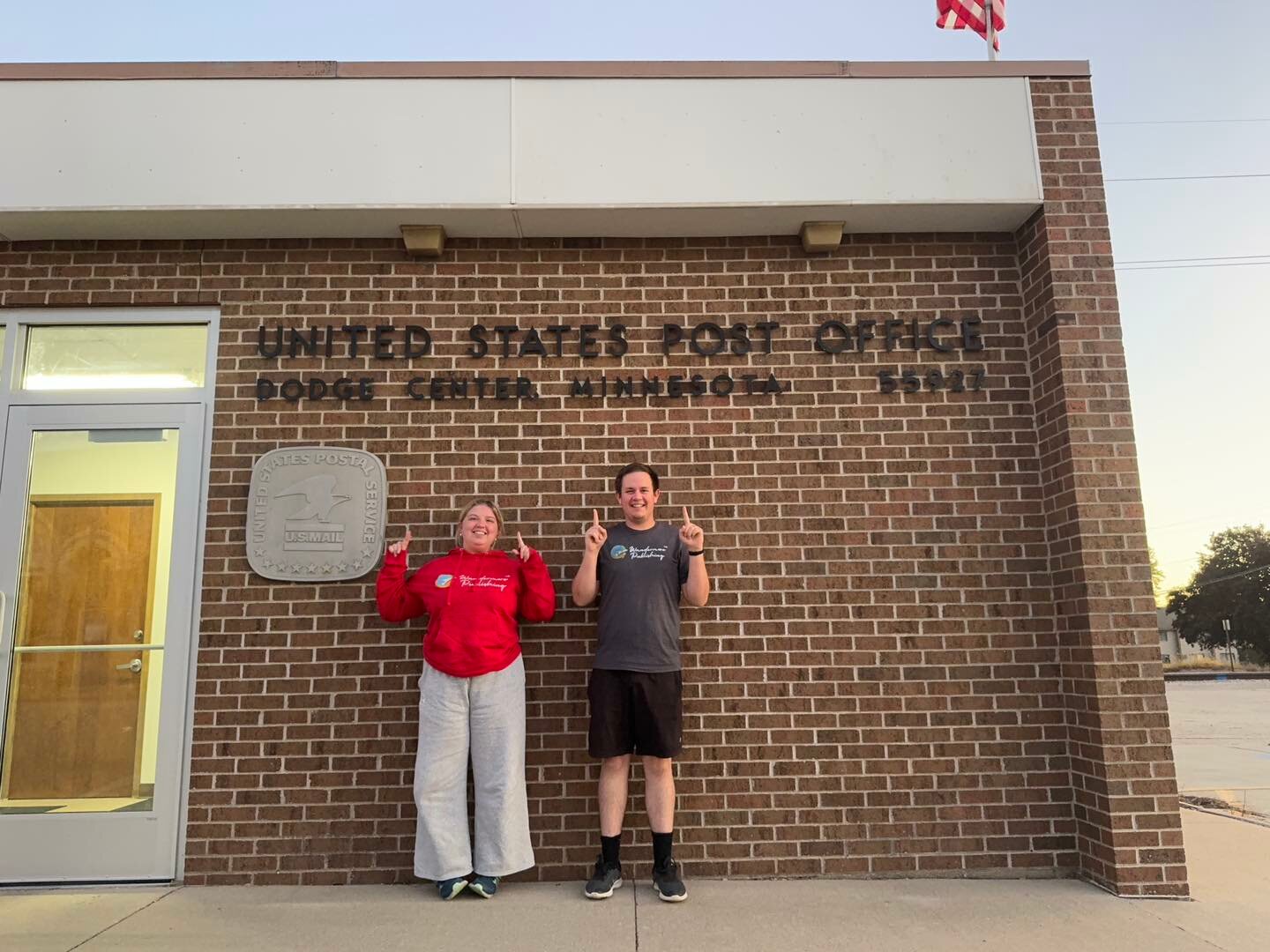


Dodge Center, MN
Population: 2,844
Named for its centralized location within the county, which D. C. Fairbank named for Henry Dodge, the 1st and 4th Governor of Wisconsin Territory, Dodge Center welcomed its first train engine on July 13, 1866, via the Winona & St. Peter Railroad, and was soon platted as Minnesota's newest village in 1867. Some locals disliked the name and instead wanted to name it Silas, but despite submitting a bill to the legislature in 1870, the Dodge Center nomenclature remained intact. D. L. Tyler owned the first general store, but by 1870, there was also the Kinney House hotel and two grain elevators. An opera house, the Dodge Center Press newspaper, the Windsor Hotel, the Hartley House hotel, and a three-story roller mill were among the significant business developments of the city as it grew following the arrival of a second railway, the Chicago & Great Western (then the Minnesota & Northwestern) in 1870. Flour from the mill won first prize at the Chicago World Fair in 1893. Religion was also of the utmost importance to the townspeople of that era; by 1905, there were Congregational, Methodist Episcopal, German Lutheran, Seventh-Day Adventist, and Seventh-Day Baptist church edifices. Dodge Center's stature and importance only continued to grow over the decades, as it surpassed the one-thousand-citizen mark in the 1940s and two-thousand persons by the start of the 20th century. In 1990, the schools in Claremont, West Concord, and Dodge Center combined to form Triton Public Schools. Astronomer Milton L. Humason was born in Dodge Center in 1891 and worked with Edwin Hubble to help provide evidence of the expansion of the universe. Perry Greeley Holden, the first professor of agronomy in the United States from 1896 to 1900 at the University of Illinois at Urbana-Champaign, also hails from here, as does Shirley Ardell Mason, a woman with dissociative identity disorder whose life was described in the 1973 book Sybil: The True Story of a Woman Possessed by 16 Separate Personalities.
West Concord, MN
Population: 861
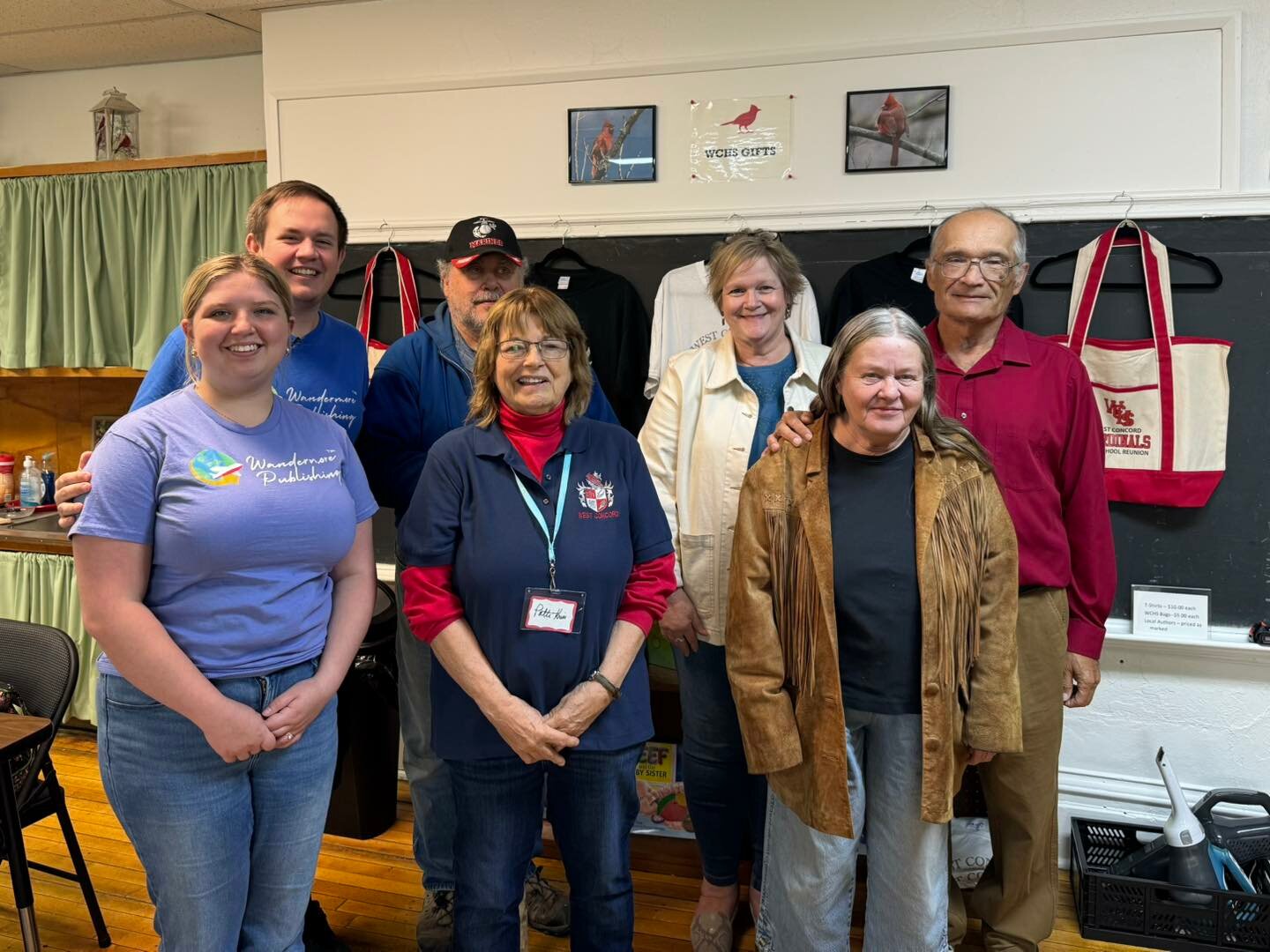
Formerly the home of the West Concord Cardinals, the historic 1902 West Concord High School, expanded in 1914 and 1936, has since become The West Concord Historical Society & Community Center. The organization seeks to preserve the extensive history of West Concord, which was platted on June 1, 1885, and incorporated for the first time on February 19, 1894. It was named after Concord, New Hampshire. A post office opened in 1885, and within twenty years the community boasted of several elevators, an engine house, a jail, a mill, a creamery, a depot, two hotels, a Methodist Episcopal church, an Episcopalian church, and two schools. The Chicago & Great Western Railroad was responsible for its semi-large (for a small town) population of 635 people in 1900, which eventually grew to 871 in the 1990s. Aside from the public school, only the early-1870s Italianate farmhouse of Perry Nelson is listed on the National Register of Historic Places.
-Claremont, MN
Population: 513
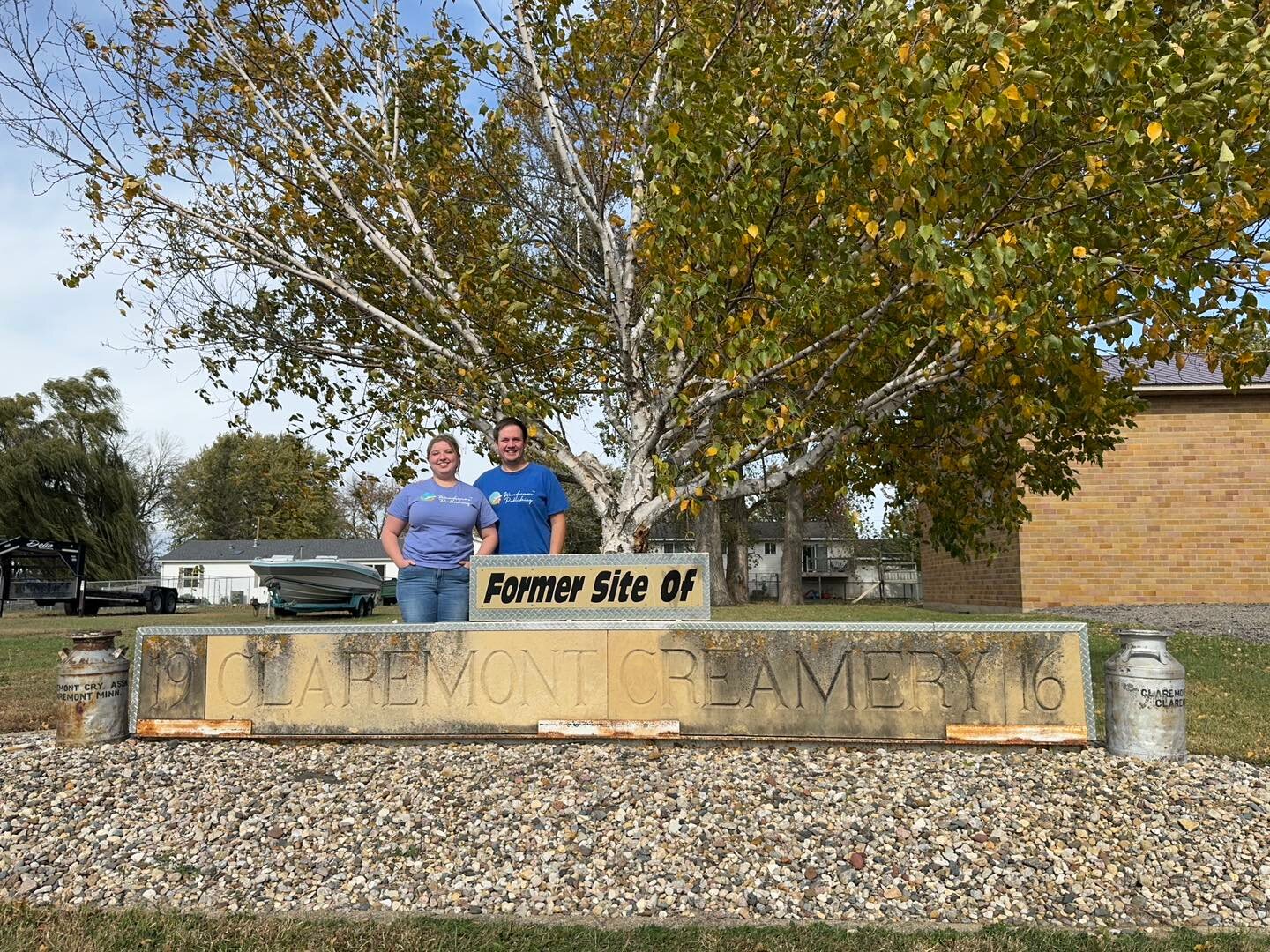
Claremont was named after Claremont, Sullivan County, New Hampshire, and was once an essential agricultural stop on the Chicago & North Western Railway. George Hitchcock was postmaster in 1856 when a branch of the postal service was established; there was also an "East Claremont" post office from 1872 to 1879. After its incorporation on March 22, 1878, Claremont's industry focused primarily on butter, eggs, and other agricultural products. The economy bolstered the town's ability to welcome more residents, thereby opening more businesses and attracting more organizations, a few of which by 1905 included two elevators, lumber yards, stockyards, a feed mill, a creamery, a hotel, a bank, and Catholic and Methodist Episcopal churches. As many as 620 people (in 2000) have historically lived in Claremont at one time, according to U.S. Decennial Census records.
What is Wandermore in Minnesota?
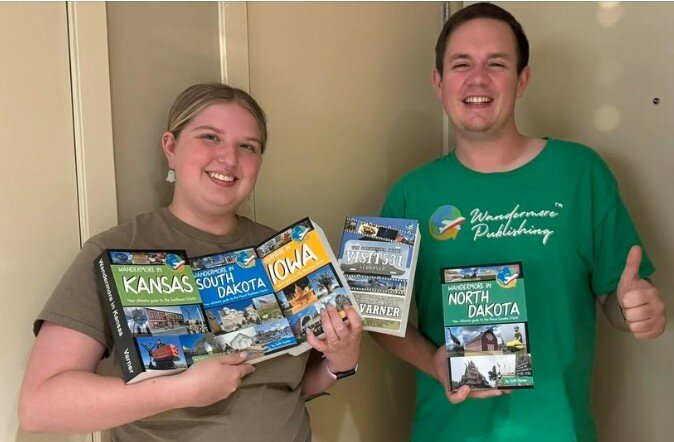
Hey! If you’re reading this, congratulations! You’ve discovered one of my posts on the greatest Minnesota town documentation project in history. My name is Seth Varner, and I’m a 25-year-old travel and history author who’s on a mission to document all 856 of Minnesota’s incorporated communities throughout 2025. In 2020, I had the idea to visit every incorporated town in my home state of Nebraska. I have since traveled to every incorporated town in Nebraska, Iowa, Kansas, and both Dakotas (over 3,000 communities) in the last half-decade. My project aims to showcase as much as possible about Minnesota’s 856 communities (big or small), from their history and architecture to businesses, museums, food, parks, and more. Although I sadly won’t be able to capture a picture of every “thing” in every town, I’ll try my absolute best to photograph as many businesses, churches, schools, and other points of interest as I can to provide folks with a general sense of what the town looks like in 2025.
Once I finish traveling the Land of 10,000 Lakes, I will compile a travel guide, “Wandermore in Minnesota.” It will be a travel guide, a history book, and a living photo album all under one cover, and the most comprehensive guide to Minnesota’s 856 incorporated towns ever created. If you enjoyed this post, please consider helping me continue to preserve history and promote small-town tourism by donating to the Wandermore travel fund. I freely share my photos/town write-ups on Facebook for your enjoyment, so any contribution to help offset the cost of food, hotels, gas, car repairs, etc., is greatly appreciated. I have enabled a donation portal after a few individuals expressed an interest in supporting my journey by contributing funds. For every $5.00 donated, I will place one person’s name (at the donor’s discretion) in the back of the Wandermore in Minnesota book upon its release ($10 = 2 names, $20 = 4 names, etc.). You can request to have your name printed, a friend or family member’s name (living or “In Memory of"), or even a business name. The names will be printed in every copy and edition of the book forever!