I’ve loved berries and berry picking for as long as I can remember. As a child, summer meant a succession of wild and tame berries that I enjoyed picking and especially eating. It seemed to me that I saw berries everywhere—in our yard, in the road ditches, in our woods, and our pasture.
The berry season started out for me with mom’s garden strawberries and a few wild strawberries I found in our yard—so tiny. My mouth soon watered when I saw wild red and blackcap raspberries growing virtually everywhere around me. My birthday is mid-summer and I knew that was when I should go to the woods, wearing one of my dad’s shirts to protect me from insects and barbs, to pick gooseberries which I found so tasty. Blackberries followed but there were never enough of them to suit me in our pasture and woods. My beloved berry season was topped off with wild grapes, elderberries and blackhaws. My grandpa John introduced me to blackhaws in our woods and I immediately liked them, but I have never heard anyone else talk about eating them.
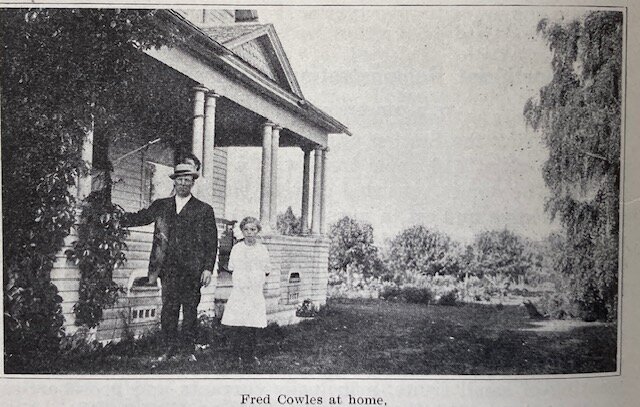
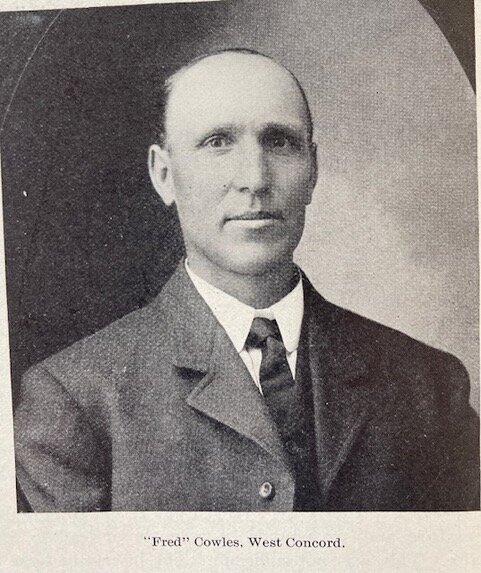
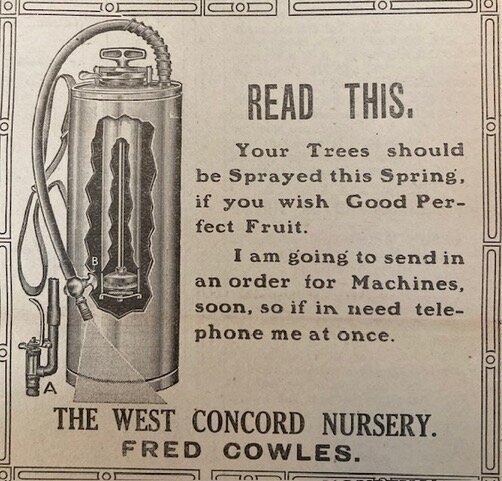
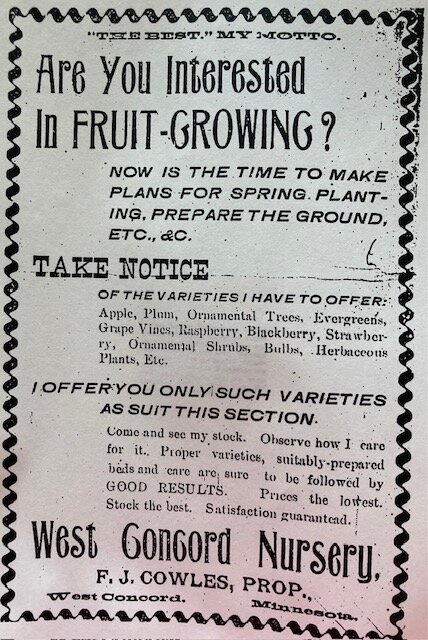
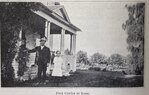
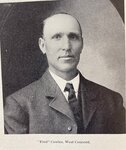
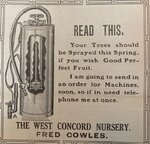
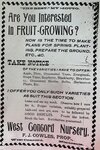
So with that background in mind, is there any doubt that I would be a berry grower as an adult? My strawberry and red raspberry patches are important to me and I am never too tired to pick berries, but my passion for berries could never match that of Fred Cowles, West Concord’s very own horticulturist who founded The West Concord Nursery in 1894 and became a member of the newly established Minnesota Horticultural Society in 1898.
I have written before about Mr. Cowles and his 52 years as a grower in West Concord, but this time my focus will be about his berry growing. I’ve been thinking about Mr. Cowles as two problems have entered my own berry growing life. One is the Spotted Wing Drosophila, a fly, which loves to lay eggs in strawberries and raspberries. Larvae emerge and soften the berries and give them a sour flavor. Greg and I tried covering the fruit with exclusion netting this year which has helped some. The mesh is very fine and helps keep those flies (a newer import from Asia) off the berries. My second problem is that my raspberries are not sweet this year. There are so many growing on the bush and they look mighty fine—but they are tasteless. Approximately one in every 50 tastes the way a good raspberry should. What would Mr. Cowles say?
We are so fortunate that Mr. Cowles chose for his nursery to be a Trial Station for the Minnesota Horticulture Society. We are even more blessed that he wrote annual reports for the Horticulture Society’s journal from 1902 to 1928. Some of these bound Minnesota Horticulturist Volumes are in our collection at the Museum. With thanks to Mamie and Elaine Leach, whose family bought Mr. Cowle’s home and assisted with Mr. Cowle’s nursery, we have an entire collection of Fred Cowles reports to learn from. Mamie and Elaine thoroughly researched Mr. Cowles’ writings about his Trial Station and published them in 1994, the centennial of the nursery, in “A Collection of Reports by Fred J. Cowles and Related Information about the West Concord Nursery”. What a contribution to the history of West Concord!
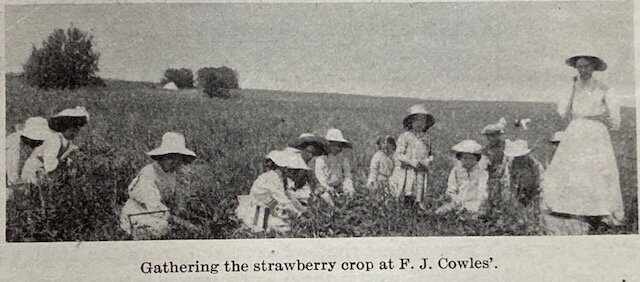
In 1928 Fred wrote an article called “Strawberries I Have Known” for the Horticulturist Magazine. He related in this article how he was laughed at when he told people in the 1890’s that he was going to raise strawberries in West Concord. Responses included arguments that a person couldn’t grow strawberries in Minnesota and if you did you wouldn’t be able to sell them. Fred said, “I paid no attention to what was said, and the first year raised 1,000 quarts and sold them all.”
As a Trial Station, Fred planted many varieties of June-bearing and ever-bearing strawberries and then determined which were best tasting, hardy, and most suitable for canning. Yes, strawberries were canned in those days. I’m glad we have freezers today. I never thought canned strawberries resembled the real thing!
The July 8, 1897 issue of the West Concord Enterprise reported: “Our nurseryman, Mr. F.J. Cowles, knowing our craving appetite for good strawberries, kindly satisfied that craving one day last week by presenting us with a box of great big, sweet, juicy, red fellows. Fred raises the best berries in the state, and the ready market he has for them is enough to show that people can appreciate a good thing.” In October of that same year the Enterprise reported: “Last Monday Nurseryman Cowles sent to this office a bunch of strawberries. Some were large and ripe and some were green and even blossoms were included in the bunch. Strawberries in October in Minnesota are not a usual delicacy, but the unexpected is liable to come from Mr. Cowles’ well kept nursery.
And something quite remarkable was reported in the November 4, 1897 issue: “Nurseryman Cowles picked a strawberry a week ago last Monday that measured 3 3/4 inches in circumference. Considering the time of the year, we call it a pretty fine berry. Mr. Cowles is now busily engaged in covering his raspberry and blackberry bushes to protect them during the winter.”
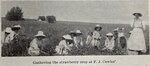
Mr. Cowles put three acres into strawberry production. In 1904 he reported that a whopping 10,000 quarts were picked, with an additional 2000 quarts lost to rain. That is a LOT of strawberries. By 1915 Fred was selling his strawberries for 15 cents a pint or two pints for 25 cents. Sometimes Fred reported that excessive rains in the fall and severe winters produced less stellar crops. Then, as now, weather had a mind of its own.
Harsh winters played havoc on raspberry crops in the West Concord vicinity, but not if they were covered, which they were at the Cowles Nursery. Hardier varieties have been developed through the years and today covering raspberries is something we don’t even think about. In fact, all of the varieties of berries that Fred tested I could no longer find on the internet, with the exception of Latham raspberries, which are still considered a premier variety today. You just may be growing them in your garden.
I am very grateful to Fred for his years of scientific trials comparing various kinds of plants. Because of him and others like him, we now have varieties of berries that can withstand drought, too much moisture, late springs, winters with bare ground, untimely hard freezes, and heavy prairie soil.
My wish for you: Taste the Sweetness of Summer, One Berry at a Time.