You know that I spend a great deal of time reading old newspapers. I was recently doing some research when I happened upon another lecture—this time from the 1927 West Concord Enterprise Editor—about shopping at home on Main Street instead of ordering from mail order catalogs. I’d encountered these reprimands several times before when skimming our collection of newspapers. This scolding proved to be particularly prophetic. Here it is:
“Every citizen who buys away from home not only helps to wipe out local
business but lessens the value of his own home property. The home
merchant has just as fine values as the mail order house. In addition he
gives you the opportunity to look over his goods, feel the cloth, and
estimate the quality. He then gives you credit and delivers the goods
to your home. The home merchant pays taxes and makes possible the
community. The home merchant, if he is prosperous, is helping the value
of every piece of property in the town. West Concord would not be much
of a town if the business district were suddenly wiped out.”
The catalog shopping movement began way back in 1872 when Montgomery Ward published the first general merchandise catalog, focusing mostly on rural buyers and offering a wide array of goods from clothing to farm equipment. The expansion of the railroad network across the U.S. was one factor in the flourishing of mail order buying. A farmer could even order a tractor and it could be delivered to West Concord via the railroad. In 1896 Rural Free Delivery was established in the U.S. That meant that farm folks could receive their goods at home instead of going to town to pick them up at the Post Office. What a boost to mail order shopping RFD was! The U.S.P.S. classified catalogs as “aids to the dissemination of knowledge” and charged them a low mailing rate of 1 cent per pound.
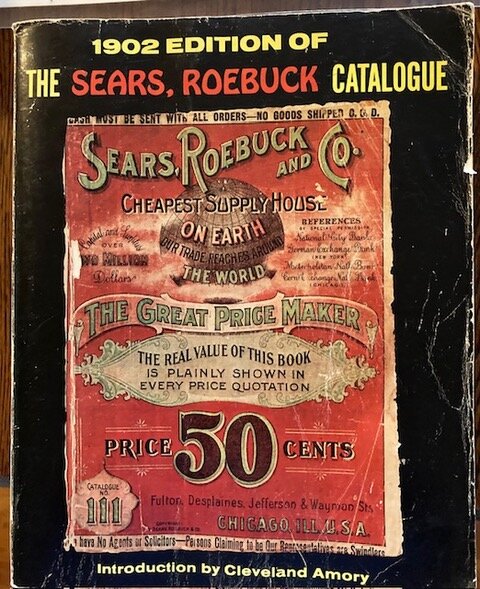
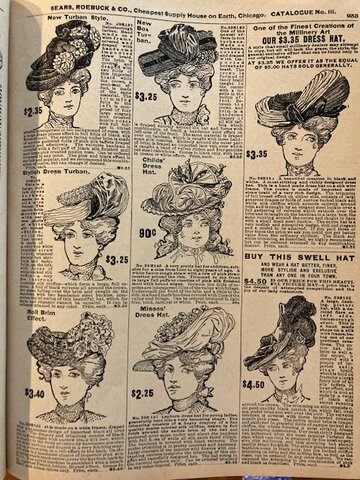
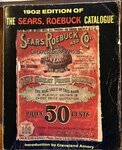
The 1902 Sears, Roebuck Catalogue (come look at the reproduction we have at the Museum) cost 50 cents. The catalog went to great lengths and many words to explain why it was not free. The main reason was that by charging for it the catalog only went to buyers and did not waste money and materials on people who had no intention of catalog shopping, thus prices for goods could be kept lower. Apparently this was not a successful promotion, because subsequent catalogs were always sent for free.
All orders needed to be prepaid, but there was an assortment of ways to pay. Post Office Money Orders, Express Money Orders, bank drafts, cash, and postage stamps were all acceptable. Yes—postage stamps. If you used postage stamps as payment you were asked to pay a bit more for the inconvenience to the seller, e.g. for a $2.00 item you needed to send $2.10.
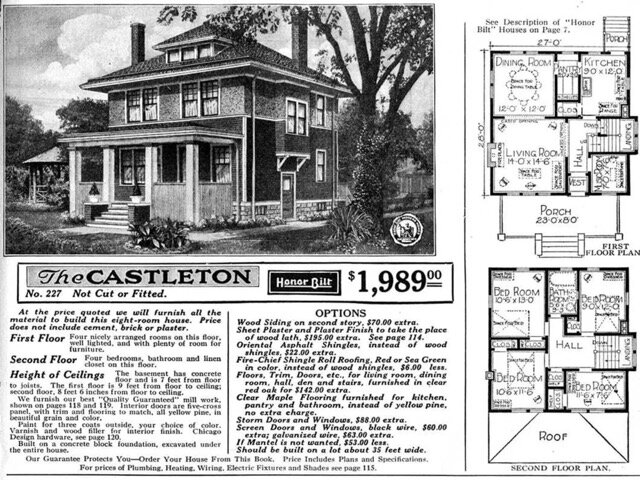
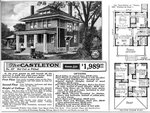
What could you order from the “Wish Book” in the early 1900s? Just about anything. Prefabricated kit homes, barns, and gas stations were available from Sears during the years of 1908 - 1940. “Build your barn and all your farm buildings the Sears way and watch your savings grow. Each Sears farm building is a sleek, handsome structure, scientifically designed by men who know exactly what is required of a barn and what farmers’ needs are,” proclaimed one Sears ad. I wonder if we have any kit houses or farm buildings in our West Concord area?
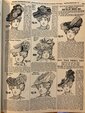
Skimming the Museum’s 1902 Sears catalog I saw everything from buggies and milk wagons to windmills and hay rakes. Clothing, household goods, musical instruments, and cure-all medicines filled the pages. I was curious to see how Sears’ prices compared to those of West Concord merchants in 1902. I paged through a whole year’s worth of 1902 newspapers to discover that prices were usually comparable, but the convenience of not needing to come to town in the horse and buggy, along with the wider selection in the more than 1000 pages of items in the catalog, was chosen by enough people to keep the mail order business booming.
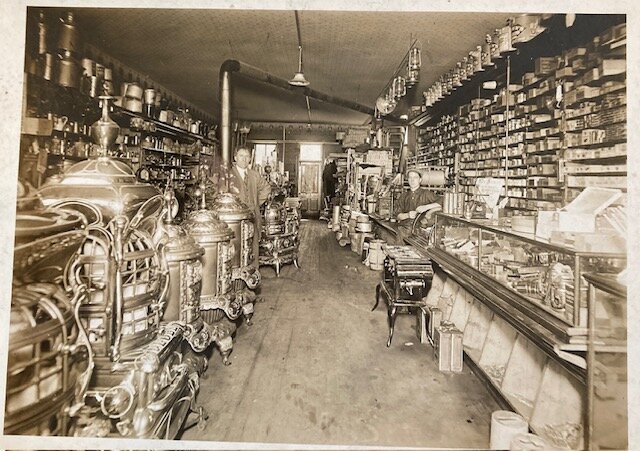
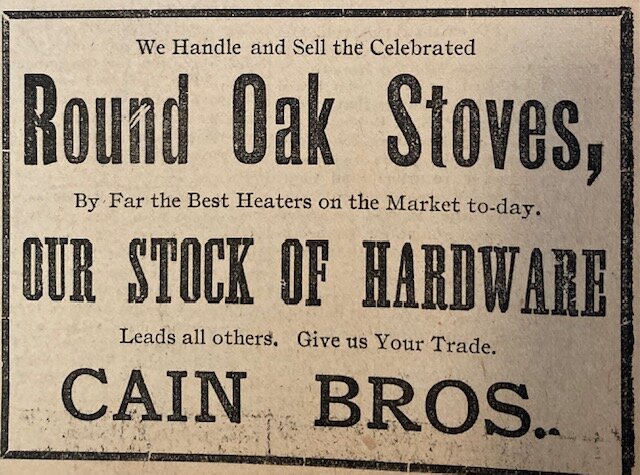
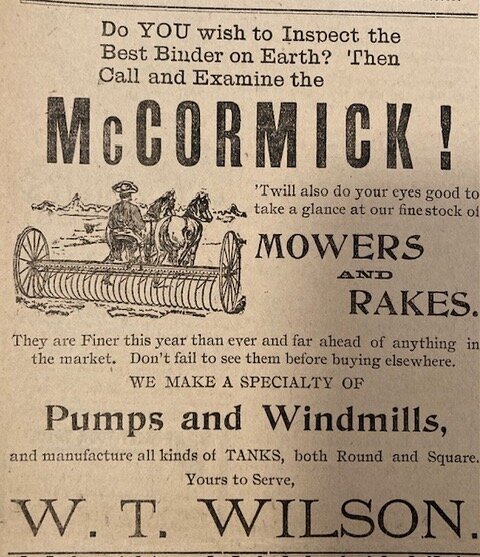
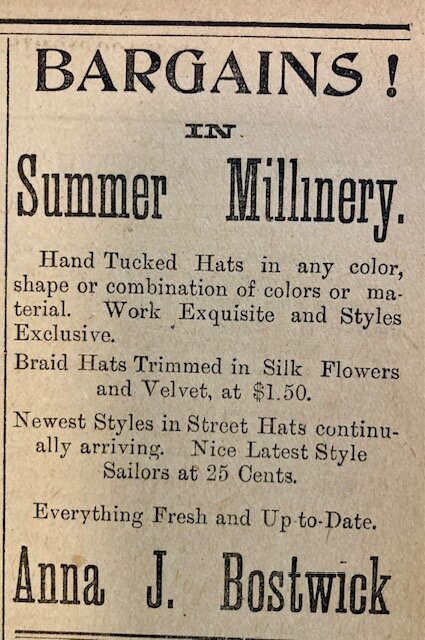
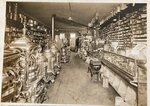
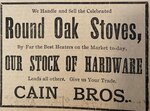
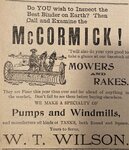
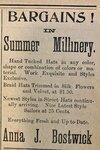
Yet, I think I would rather have gone to Anna Bostwick’s hat store in West Concord to get my summer finery and be able to try on Anna’s hats on the spot. She advertised braid hats trimmed in silk flowers and velvet for $1.50 or a brimmed straw Sailors hat for 25 cents. M.E. Collins, the Orcutts, H. H. Roe, the Martig brothers, and more sold clothing and dry goods in West Concord in 1902. The Cain brothers and J.C. Crossett sold washing machines, stoves, and all kinds of hardware. W. T. Wilson sold corn shredders, mowers, rakes, pumps, and windmills. You could get it all in your hometown if you wanted to.
Although Sears and Montgomery Ward both filed bankruptcy and ended their catalog businesses in the late 20th century and early 21st century, catalog shopping still plays an important part in our lives today. Many catalogs are smaller and specific and many of us go online to order from them, although on-paper ordering is acceptable, too.
Amazon, ebay and a vast assortment of .coms are America’s go-to online “catalog” shopping centers these days. We study the online offerings the same way people used to examine the catalog “wish” books. The vast array of goods offered and the convenience make life easier for us—just the way Montgomery Ward and Sears catalog shopping once did. Yet, the “shop local” movement is alive and well just as it was in the 1902 Enterprise. Two of their mantras are “Good things come to those who shop local” and “When you buy from a small business, an actual person does a happy dance.” It puts a smile on my face to think of West Concord’s 1902 merchants’ pleasure and relief every time folks stopped in and bought their goods. As Dan Rather said, "Supporting small businesses is not just about commerce; it’s about community.”